Every result the Foundation pays for is published without embargo, without a paywall and without a patent held back. This has been a condition of award since before the Foundation existed; it is why we have never had to ask anybody for data.

Seventy-five
years to Mars
The Foundation does not propose to go to Mars. It has been paying for the parts of going since 1951 — instruments, models, coatings, seals — and the first crew leaves in 2031.
Scroll1951
first endowment in the record
2000
year the Foundation was filed
512
grants awarded since filing
3,118
published results, nil embargoed
4.18bn
credits disbursed to date
2027
construction authorisation
Purpose clause, articles cl. 2
To advance, by patient and unglamorous means, the establishment of a permanent human presence beyond this planet; and to publish, without embargo or exception, everything it learns in the attempt.
It has not been amended since 14 March 2000, and the second half is the expensive half. Anyone will pay for a result. We also pay for the result that did not work, the calibration that made both of them worth trusting, and the printing.
The Foundation builds instruments and gives them away. It does not operate spacecraft it could instead fly on, and it does not buy a facility a university already has. Ownership is overhead; instruments are the work.
No programme is assessed on a horizon shorter than eight years. Nothing in the charter requires an announcement, and the Foundation has never held one. A schedule that survives four transfer windows is worth more than a schedule that reads well.
The Foundation pays for the part of a mission nobody photographs: the seals, the coatings, the calibration targets, the bearing specification, the second detector that proves the first one. It has declined every naming right offered to it.
Programme LONGBOAT · PRO · 2022 →
Longboat
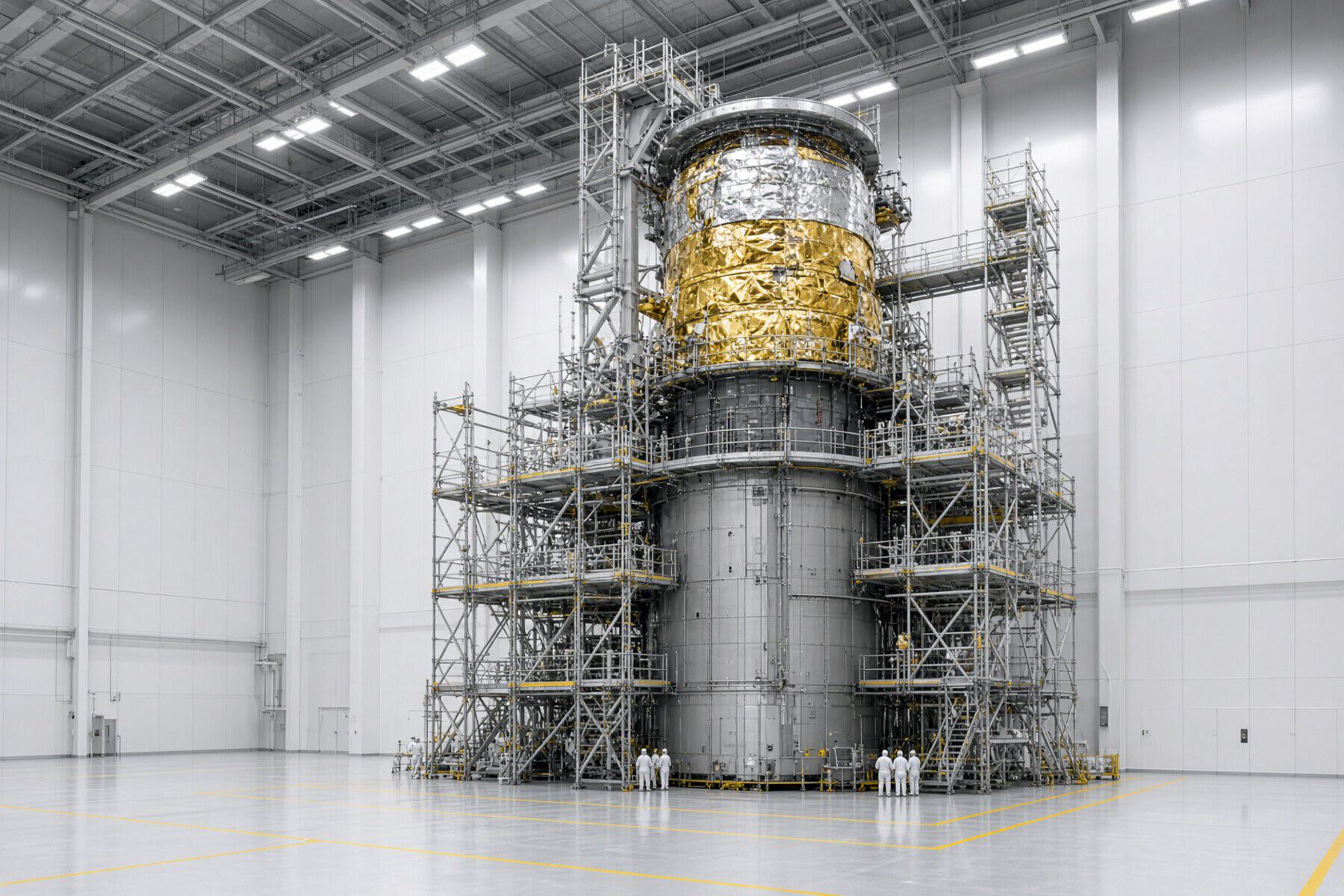
68 metres of reactor-electric transfer vessel, assembled in orbit, that never touches either surface. Six berths, and 142 tonnes of water stacked forward of the crew — because in 1962 a man named Banich wrote that shielding is a water problem, and nobody has found him wrong since.

Programme PLUMBLINE · SUR · 2004–2021
312 sites.
Then three.
Not a flag and not a fortnight — somewhere people stay. It took 17 years of survey and 46 funded instruments to answer the one question that decides everything else: where do we put it. Thessaly Bench won on water, slope and dust, in that order.
Programme TENDER · PRO · 2023 →
Five windows
Cargo precedes crew by two windows, always. Nothing flies with people on it that has not already flown without them.
- TDR-01Power plant, 1.4 MWe · 38.2 t
- TDR-02Sinter works and pad plant · 31.7 t
- TDR-03Consumables and spares cache · 26.4 t
- TDR-04Habitat shell 1 · 44.1 t
- TDR-05Habitat shell 2 · 44.1 t
- TDR-06Water plant and stores · 29.8 t
- LB-1 (U)Vessel, uncrewed shakedown transit
- LB-1 · crewedFirst crew of six · 258-day transit
- TDR-07Habitat shell 3 and crop article · 41.6 t
- LB-2 · crewedSecond crew of six · first return crew outbound relief
- TDR-08Industrial plant, second phase · 36.9 t
- LB-1 · crewedCrew rotation three · continuous occupation begins
- TDR-09Expansion shells 4–5 · 58.2 t
Opened 2026 · the next two problems
What has to work before 2031
Two programmes stand between the cargo already manifested and a station anybody can live in. Both were opened this year. One of them may never produce anything at all.
Androids that finish the work first
Earth and Mars are 3 to 22 light-minutes apart, so a machine that has to ask permission waits the better part of an hour for it. JOURNEYMAN units are autonomous in the only sense that matters: nothing on Earth sits in the control loop. They are built to the crew standard — the same hatches, handholds and tool fittings people will use from 2031 — because the alternative is shipping two of everything. Four fly in the 2027 window, 24 in 2029, and 40 are to be on the ground before the first crew arrives.
A link with no wait in it
Every decision taken at Thessaly Bench will be taken by people who cannot be asked. SEMAPHORE exists to end that. No mechanism is known that would permit it — entanglement does not carry information, and the no-communication theorem is a proof rather than an engineering obstacle. We say so here because we say everything else. Eleven lines of attack funded, 11 null results published, and a charter obliging us to report each year that we have failed.
We are aware of how this reads. We intend to keep funding it.

The prior record · 1951–1968
49 years before
we existed
The Foundation was filed in 2000 and takes credit for none of what came before it. But every specification we write today cites at least one paper from a chain of quiet endowments, and that chain starts with 47 photographic plates of Mars taken at Mount Sabel over three winters from 1951.
Publication covenant
3,118 published results. 206 of them negative. None embargoed, ever.
A grantee’s final report reaches publication in a median of 41 days. There has been one exception in our history, in 2011, and it went the other way: 11 days, because the result contradicted one of our own specifications and the people building to it needed to know.
The Foundation was endowed at filing and its fundraising line has read zero every year since. It has never run an appeal, held a press event or sold a naming right, and it does not intend to start.